You scored 18/60, suggesting less smartphone addiction than 72.5% of women over 50 in Canada
| Item | Your score | Average |
| Interferes with work | 12 | 12 |
| Impairs concentration | 12 | 12 |
| Causes physical pain | 123 | 12 |
| Can’t live without | 12 | 123 |
| Impatient without | 1 | 12 |
| Phone on mind | 1 | 12 |
| Would never give it up | 1 | 12 |
| Constantly check | 1 | 12 |
| Use longer than intend | 1234 | 1234 |
| People say overuse | 1 | 12 |
Interpretation
| Your score: | 18 |
| High risk threshold: | 33 |
| Average (women over 50 in Canada): | 24.14 |
Smartphone addiction occurs when compulsive phone habits interfere with daily life, for example by reducing concentration or interfering with work. You scored 18, below the threshold (33) for a high risk of smartphone addiction.
Your score was lower than the comparison group (24.14), a sample of 559 women over 50 from Canada (Olson et al., 2023). The total score can range from 10 to 60. Recent averages for young adults across the world range from 28 in the Czech Republic to 34 in the Philippines.
The first 10 questions were the short version of the Smartphone Addiction Scale, the most used scale in the field. It was developed by Kwon and colleagues (2013) and predicts clinical judgements of smartphone addiction. Here we use a slightly modified wording of the scale (as tested in Olson et al., 2020). The 11th question was a single-item version of the scale (Olson et al., under review).
Questions? Contact us.
Want to use your phone less?
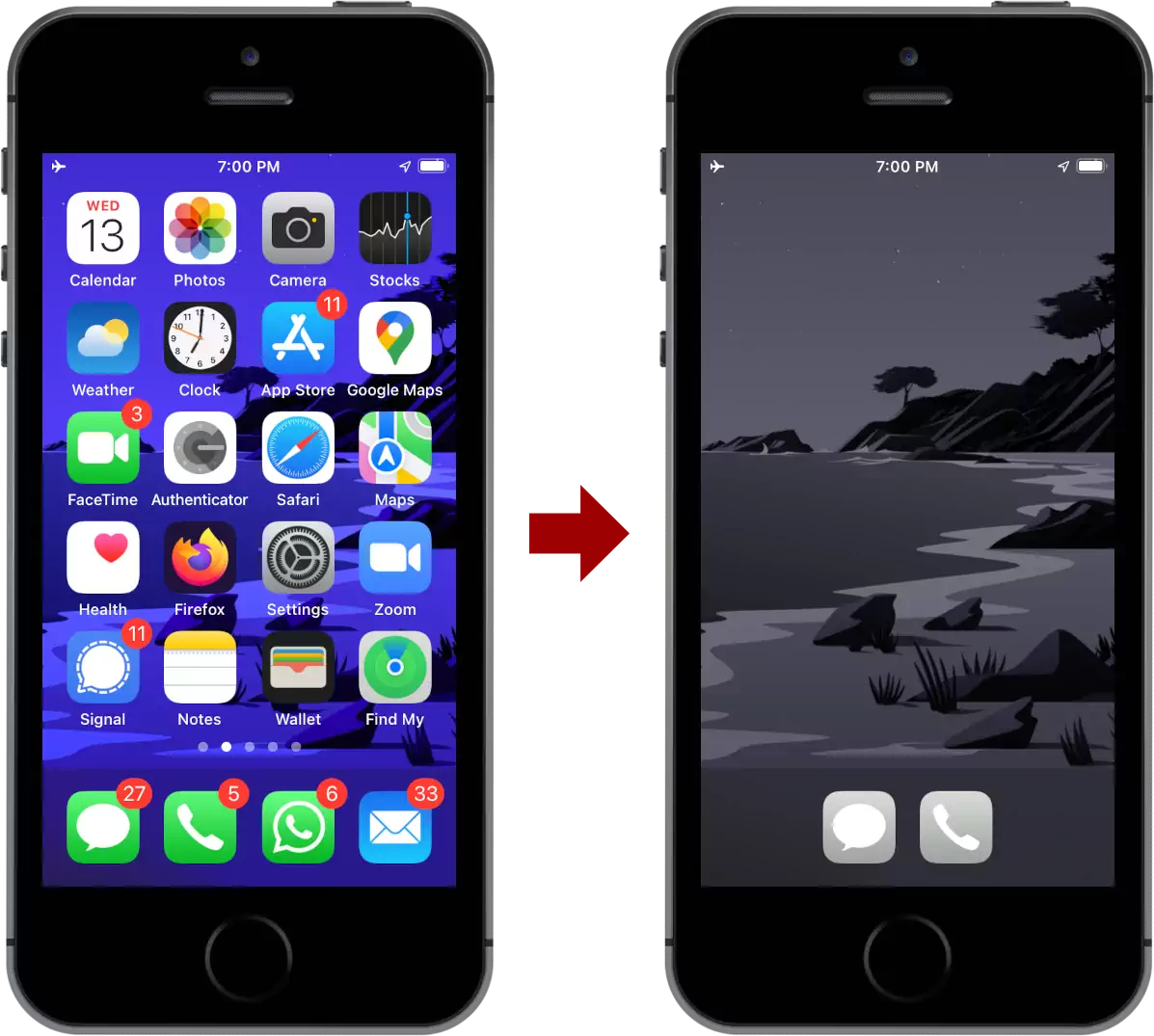
View some strategies to reduce smartphone use.
Share your score
Here is a permanent link to your results. The link contains your scale responses and demographic information (in order to show an appropriate comparison group).